
甜蜜蜜
Chinese club AG.AL wins 2026 Esports World Cup as Macron hands over the trophy, 25 years after China’s first esports gold_我的网站

一 |
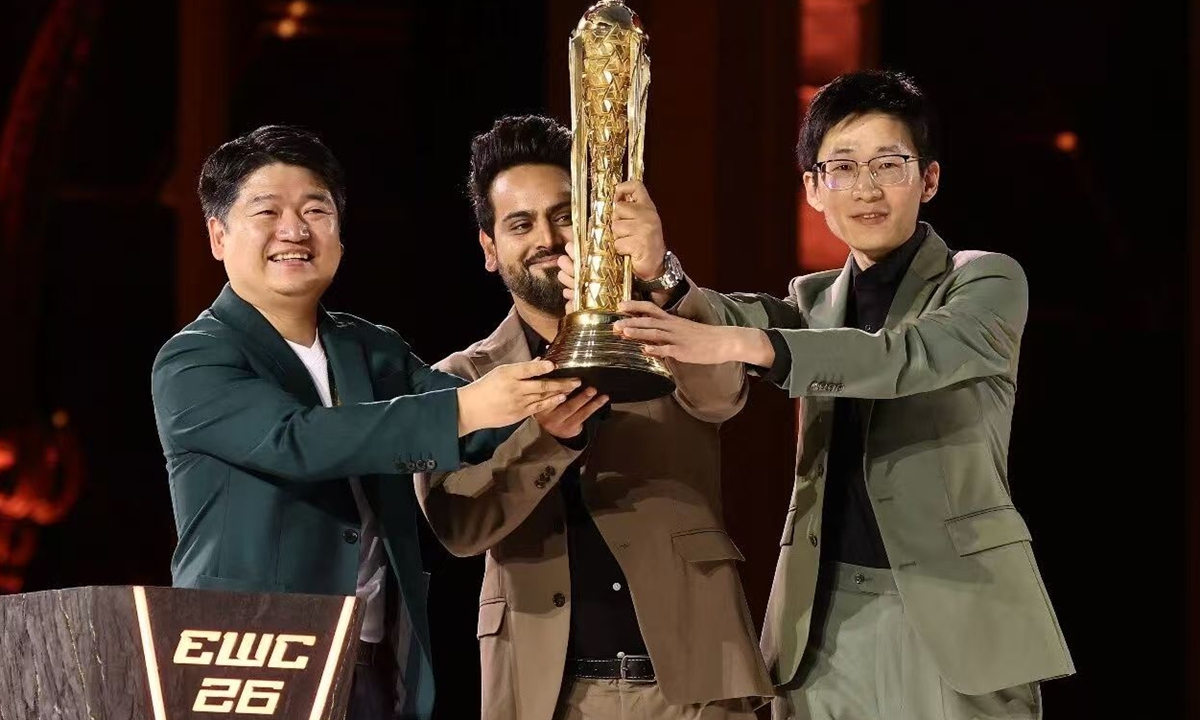
AG.AL's victory was not decided until the final stage of the competition. In the last event, Trackmania, French player Gwen held his nerve under pressure to claim the title, helping AG.AL overtake Saudi Arabian club Team Falcons in the standings and secure the overall championship.
This victory reflects a new trend in global esports competition: competition among top clubs is no longer determined solely by one popular game or a single star player, but by a club's overall capabilities in multi-title strategy, talent development and global operations.
For AG, the title was not just a last-minute breakthrough, but the result of a global strategy that had been developed over years.
"Although the tournament itself lasted only around two months, we had been preparing for it for more than two years," Chen Longsheng (EDDY), AG.AL VP&COO, told the Global Times on Monday. He said AG began expanding its overseas esports operations around the EWC in 2024, selecting promising players from around the world and now covering more than 20 esports titles.
This multi-title strategy is also closely linked to EWC's unique competition format. Unlike traditional esports tournaments that often focus on a single major game, EWC adopts a club-based ranking system covering multiple titles, including Honor of Kings, CrossFire, and Trackmania. AG.AL competed in more than 10 events, accumulating points across different competitions before completing its comeback in the final stage, according to AG.
Chen said the format has also changed how clubs evaluate the value of different esports titles.
"From our perspective, there is no absolute distinction between major and minor titles. As long as players in a game have the ability and passion, they can help the club earn valuable points," he said.
He noted that titles such as Tekken and Trackmania may have smaller audiences compared with some mainstream esports games, but outstanding players in these fields can still become important contributors to a club's championship ambitions because they offer the same opportunity to earn crucial points.
Under this new competitive environment, esports clubs are also shifting from building teams around a single title toward developing more diverse talent systems.
However, for an esports club competing on the global stage, finding the right players is only the first step. Building a stable team among players from different countries and regions, while ensuring smooth operations at international tournaments, also tests a club's management capabilities.
"Cross-border operations involve challenges including language communication, contract arrangements, legal regulations, and player support," Chen said. "Different countries have different legal environments and salary systems, and coordinating all of these issues is actually very complicated."
According to AG, during this year's EWC, staff members followed the teams throughout the process, from players' arrival in Paris, to training arrangements, communication with tournament organizers, post-match interviews and their departure.
"Fans see the players on stage, but behind them there are many operations staff ensuring that the entire team runs smoothly," Chen said.
AG's own development journey also reflects the changes that have taken place in China's esports industry over the past two decades.
In 2001, AG's predecessor won the StarCraft title at the World Cyber Games (WCG) Grand Finals, earning China's first world-level esports gold medal. Twenty-five years later, AG once again reached the top of an international competition. But the way esports is contested has changed dramatically - from battles centered around individual games to competition among global clubs based on talent, operations, and broader ecosystems.
"Over the past two decades, Chinese esports have gradually moved beyond the era when success depended mainly on individual players or a single game title, and developed into a more mature ecosystem involving clubs, professional leagues, content creation, commercial partnerships, and international exchanges," Shanghai-based esports commentator Natto told the Global Times on Monday.
According to Natto, the growing international presence of Chinese esports clubs also reflects a broader change in how the industry views overseas markets.
"Going global is not only about sending teams abroad to compete," Natto said. "It also means understanding different audiences, building communication channels and allowing more people to see the diversity of Chinese esports."
。

二 | 在2026年WIC这场体量巨大的展会中,我们看到了行业正在迎来全新的发展阶段。 据统计,今年共有242家机器人与智能硬件相关企业参展,占全部展商的23.6%,成为WAIC 2026最热赛道;206家参展主体集中于“算力·芯片·基础设施”大类,占比20.1%;大模型与生成式AI赛道共有130家参展主体,体量与去年大致持平。 在这组数据背后,一个值得观察的变化是:以电商和物流起家的京东,正在把展陈重心从数字服务转向物理世界。

三 | 本届WAIC,京东以"AI进入物理世界"为主题,展出了JoyAI大模型矩阵、具身数据全链路基础设施,以及面向家庭场景的JoyInside AI Home。 从入口到中间层 JoyInside是京东在本届展会上重点推介的项目。据现场披露,该项目已与近200家家电、机器人、玩具、健康设备品牌达成技术合作,接入硬件的平均对话轮次提升超过120%。 2026年,JoyInside计划接入超千万台终端设备。从定位上看,JoyInside并非底层操作系统,而是介于AI能力与硬件之间的交互中间层。

四 | 京东科技AI创新业务负责人戴文军在现场表示,这一层的设计逻辑是围绕家庭中的多设备、多场景、多用户,实现设备间的协同响应。

五 | 商业模式上,JoyInside向合作品牌免费开放自动语音识别(ASR)、语音合成(TTS)和大模型交互能力,硬件端仅产生模组增量成本。 同时,京东零售渠道为合作硬件提供新品首发、线上销售和售后维修的一体化支撑。这种"技术免费+渠道绑定"的策略,与当前智能家居行业的普遍打法类似——小米、华为、海尔等厂商均在以不同方式推进全屋智能生态,京东的差异化在于其电商履约能力而非技术独占性。

六 | 京东集团副总裁、京东探索研究院副院长段楠在本届WAIC上阐述了京东面向物理AI的阶梯式技术架构:数字智能、附身智能、物理智能。这一框架的核心逻辑是,在基础模型能力之上逐步演进,推动AI从数字世界走向物理世界。 第一层是数字智能,即JoyAI多模态大模型底座,覆盖图像、语音、视频、实时交互和具身智能等方向。部分模型已开源至Hugging Face和GitHub。

七 | 第二层是附身智能,将大模型能力轻量化附着到机器人、可穿戴设备和家电家居设备,实现从"单品智能"到"空间智能"的升级。

八 | 第三层是通用具身智能,目标是让移动机器人在真实空间自主完成感知、建模、抓取和全流程作业。 这一架构的底层基础设施包括具身数据采集系统、JoyAI-RA具身基础模型、开源EgoLive第一视角数据集,以及JoyAI-Sim仿真数据合成工具链。从行业视角看,这种真实数据+仿真数据+真机验证的闭环设计,与智元、优必选、宇树等具身智能厂商的数据策略并无本质差异,区别主要在于京东拥有零售和物流场景产生的真实交互数据。 数据 本届WAIC上,京东集团副总裁龚义成披露,京东计划在两年内积累1000万小时高质量具身数据。这一目标的背景是,行业对数据规模的需求正在快速提升——此前业界普遍认为百万小时数据即可满足训练需求,但随着模型泛化要求提高,共识已逐步向千万小时量级迁移。 但数据的质量如何定义,目前行业内尚未形成统一标准。龚义成在现场表示,脱离模型和真机场景验证的采集数据只是表面素材,真正有价值的数据必须完成采集、处理、训练、真机验证的端到端闭环。 这一判断与当前具身智能行业的核心瓶颈一致:适配机器人训练的高质量物理交互数据仍然匮乏。值得注意的是,1000万小时并非一个固定的终点,而是基于模型迭代需求测算的阶段性规模。在数据竞赛日趋激烈的背景下,京东、智元、优必选等厂商均在以不同方式扩充数据储备,谁能率先建立可复用的数据闭环,将在下一阶段竞争中占据优势。 物理AI的落地距离尽管具身智能在本届WAIC上备受关注,但段楠在现场也承认,当前全球具身智能尚未迎来标志性的"GPT-3时刻"。模型泛化能力、统一评测标准、跨本体迁移技术均处于单点突破阶段,尚无成熟的通用解决方案。这一判断与行业现状基本吻合。

九 | 不同于互联网大模型仅需算力、数据和模型三大要素,具身智能增加了硬件规模化这一维度。

十 | 硬件量产和终端落地,正在成为下一阶段行业竞争的关键变量。 京东的优势在于其零售和物流场景可以提供真实的物理交互环境,但劣势在于其机器人整机制造能力弱于专业厂商。从战略定位看,京东的长期目标是成为物理世界运营公司,同步发力数据、模型、算力和硬件。段楠表示,京东内部衡量AI业务落地效果的指标包括体验、成本和效率,现阶段以高质量数据规模化作为核心抓手。但他也承认,未来具身智能行业不会出现一家独大的格局,开放共建是必然趋势。这一表态本身说明,在物理AI这条赛道上,京东仍在寻找明确的边界。 更多精彩内容,关注钛媒体微信号(ID:taimeiti),或者下载钛媒体App。
Current article:http://3nb.ruidunguizanpaorangchongouxia.sbs/x0cw15/r8e.html
Published on:06:49:31
- 猜你会喜欢....


